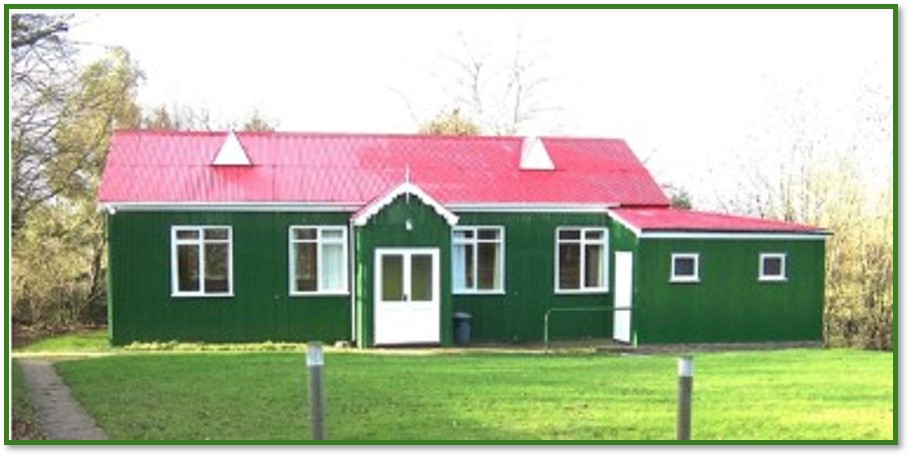
A History of Hever Village Hall
I had always assumed in a vague sort of way that village halls had been part of village life from the beginnings of time – the time of moot halls and maypoles on the village green. But no. The vast majority are the product of the First World War and a new consciousness about the need for community and education amongst rural people. This was led by the newly created National Council of Social Service (NCSS – now NCVO).
At the same time people wanted to make donations in memory of the fallen, often to build memorial halls. This ignited a great outbreak in construction, including Four Elms village hall which displays a list of all those who fought (not just those who died). There are now about 11,000 village halls nationwide of which about 10% are memorial halls.
At the same time people wanted to make donations in memory of the fallen, often to build memorial halls. This ignited a great outbreak in construction, including Four Elms village hall which displays a list of all those who fought (not just those who died). There are now about 11,000 village halls nationwide of which about 10% are memorial halls.
Hever did not build a memorial hall; their hall was donated by the Astor family very much at the same time. The hall is what is known as a “tin tabernacle” – a prefab building designed to be erected all over the country in areas where the locals needed access to a church. As far as we know, this one was bought by the Astors not as a place of worship but for use by the 1,600 navvies who were brought to Hever between 1903 and 1908 to build the Tudor village, pleasure gardens and dig the lake, thus giving shape to Lord Astor’s new gem.
Some may have slept in the hall, although given their numbers it seems too small. If they did, a thick rope would have been stretched down the length of the hall at night to serve as a collective pillow. There is an example of a tin tabernacle, set out as a church, in the Weald and Downland Museum near Chichester. We will never know more about the hall when it belonged to the Astors as their historical records, which were stored in the Castle basement, were lost in the two big floods of 1958 and 1968.
Once work on the Castle was complete, the tabernacle probably lay empty for quite a few years. By the time Lord William Waldorf Astor died in 1919, it was no longer needed. His son John Jacob and daughter-in-law Lady Violet then inherited the estate and began making major changes at the Castle. John Jacob had seen active service in the war, indeed he had lost a leg, and he was well known for his kindness toward the castle staff, particularly ex-servicemen. Therefore, it was not surprising that he and Lady Violet wanted to extend their philanthropy beyond the castle boundary and give the old tabernacle to the village.
So in 1920 the building was moved to its current site as a reading room for the men of the village. It was called the “Men’s Reading Room” – although many women had just been given the vote it seems that the focus was still on improving the men folk!
The donors of the site were the Meade Waldo family of Stonewall Park who had sold the Castle to the Astors and still owned quite a bit of land locally. The premises comprised a large room, a smaller meeting room and a kitchen. The ‘necessarium’ was outside, and consisted only of buckets in a lean-to shed!
By the 1930s the improvement of the men folk must have stalled because the ladies of the WI took it over as the Hever Bullen Women’s Institute. They eventually found the financial burden too heavy so in 1947, following a public meeting held in the school, it became Hever Village Hall. What this meant was that it belonged to the village, and was administered by a Board of Trustees. In 1984 it became a registered charity, which is how it remains today.
Local farmer David Woollett was the Chairman and leading light for most of the post war years. He did a huge amount of work for the hall, including laying the floor and keeping it in good repair. It was famously painted red and green because there was spare tractor paint available at the time; red is the Massey Ferguson colour and green John Deere. The paddock at the rear was acquired in 1983 when, after 80 years of occupation, the Astors sold the Castle and Estate, and moved away.
Gerry Ryan took over from David in 2000 with his wife Jan as Treasurer and Bookings Secretary, and they were also massively hard working in its interests. For those who wonder about the splendid art deco wall lights, these were donated and installed some years ago by the then Vice-Chair Geoff Vodden. Mandy Yarnold became Chair in 2021.
Running a hall isn’t glamorous – it entails a lot of hard work and sewage is a constant theme. Many people have worked very hard to support it and they all deserve gratitude. Now the hall needs more help – the current hall is a bit cramped, there is no accessible storage, it is poorly insulated, the structure is crumbling and there is inadequate disability access. A new hall is planned on the site and the support of the community for this project is needed as never before.
Joanna Wade
Chair
Hever Village Hall